

RK Celje: Handball Ticketing
Challenge
One of Europe's top handball clubs needed computer supported ticket sales.
Result
Implementation of the integrated platform for handball match ticketing.
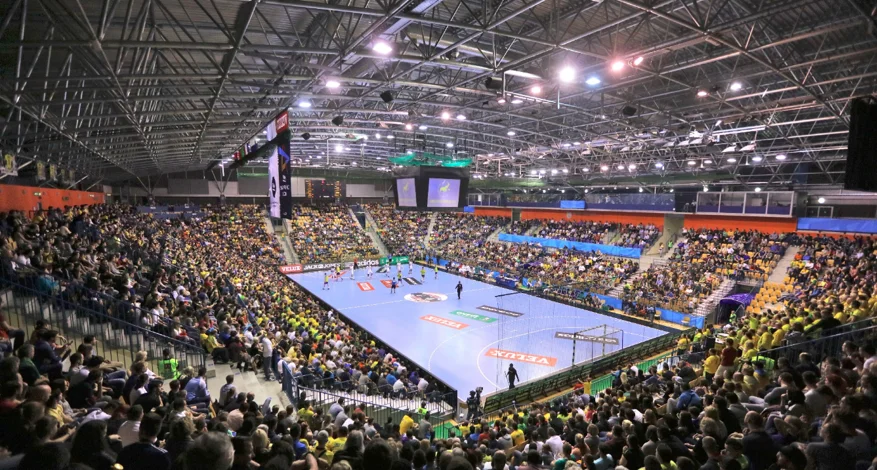
RK Celje Pivovarna Lasko introduced electronic ticketing at the end of 2003, when the new Zlatorog arena was being built for the 2004 European Men's Handball Championship. Slovenia hosted that tournament in early 2004, and much of the investment went into sports infrastructure in Celje. The arena came equipped with electronic ticketing infrastructure, and after the championship the club made it their new home.
Club president Andrej Susteric explained the decision: The smooth operation of the Mojekarte system during the spring preparations for EHF EURO 2004 convinced us of its quality, capacity and adaptability. We wanted an efficient and transparent ticket sales system that would bring us closer to the standards of major European clubs and satisfy the needs of the club, sponsors, VIP guests, business partners, home and visiting fans, and also the inspection services that review our operations every year.
Before electronic ticketing, sales at RK CPL relied on pre-printed ticket books. Tickets could only be purchased in advance at the club office, and on match day at two arena box offices. Pre-sale volumes were modest, and there was no price advantage for buying early. Fans queuing overnight before popular matches was a regular sight in media reports, and the tense atmosphere sometimes led to disturbances that required police intervention. These conditions naturally gave rise to a black market where tickets for the most attractive matches fetched several times their face value.
The club chose a gradual approach to implementation. By the end of the 2003/04 competitive season, the in-house ticket sales system and its integration with automated arena access control were running at a routine level. Everything moved faster than originally planned, largely because of the club's competitive success in winning the EHF Champions League title in the 2003/2004 season. On February 15, 2004, just two months after the system's launch, a record was set during the Champions League match against TBV Lemgo: the access control system registered 3,637 entries in a single hour between 4:00 and 5:00 PM, roughly one spectator per second.
Season cards were redesigned as credit-card-format plastic cards with unique barcodes, produced using dye-sublimation printers that ensured high print quality and durability across multiple seasons. Each card was fully compatible with the Mojekarte Access Control solution, making season card renewals as simple as scanning the barcode at the box office while the system automatically handled seat reservations, code validation extensions, invoicing and marketing database updates.
After the Champions League triumph, the 2004/2005 season brought real handball euphoria. Tickets for RK CPL's international matches became the most sought-after commodity among sports fans in Slovenia. To meet this extraordinary demand, the club partnered with the Mojekarte distribution network, which operated more than 800 points of sale across Slovenia alongside the mojekarte.si portal. The print@home solution was introduced as well, further reducing pressure on match-day box offices by letting buyers print their uniquely barcoded tickets at home for direct stadium entry.
The quantitative results from December 2003 through the end of the 2005/2006 season speak clearly: 16,904 sales transactions, 167,937 individual match tickets issued, 3,637 season cards produced, and 50,429 access control entries processed, all without a single system failure.
Today, RK Celje Pivovarna Lasko operates one of the best-organized electronic ticketing systems in Slovenia. As president Susteric put it: The economic and organizational justification for implementing computerized ticket sales became apparent almost immediately. We now see license plates from all over Slovenia and abroad in our parking lot, which we attribute to the fact that our tickets are available practically everywhere. System transparency is complete, procedures have been greatly simplified, and the club administration is significantly relieved. We were cautious at the beginning, but now we can say that drawbacks are practically impossible to find, while the advantages are substantial and measurable.
Learn more about the sector
Sports and arenas
Related case studies

Ready for the next step?