NK Rijeka: Online Sales Foundations
Challenge
Building online ticket sales infrastructure for Croatian football.
Result
Foundation for online sales across the 2014/15 season.
Creating the prerequisites for launching online sales
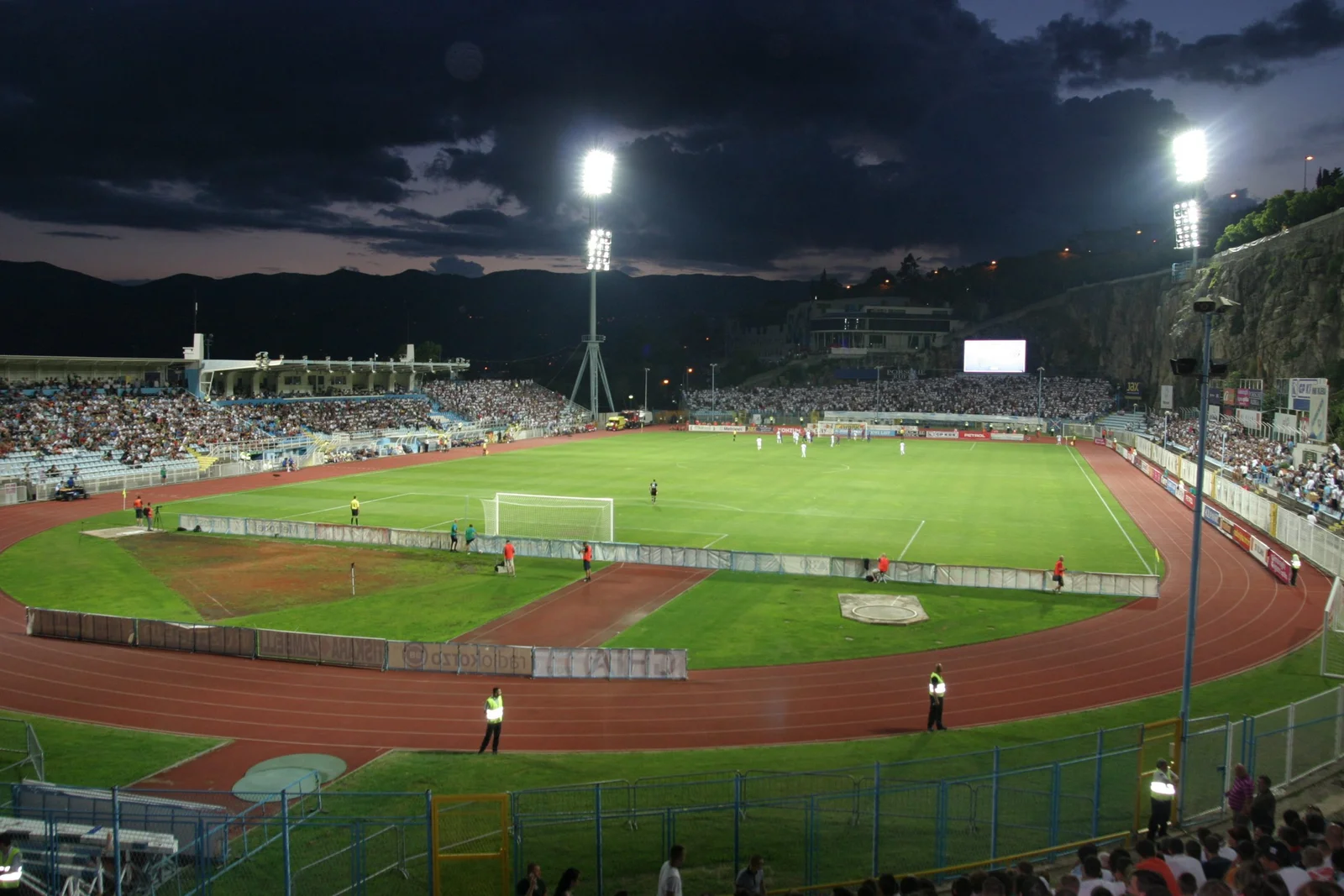
In the first half of the 2014/15 season, NK Rijeka played thirteen home matches at varying levels of organizational complexity. Eight of those were Croatian league fixtures, which, apart from two or three exceptions like the matches against Hajduk Split or Dinamo Zagreb, do not bring major sales or security challenges. Besides the domestic league, the club also played five home international matches in the qualifying cycle and group stage of the Europa League, all under the close supervision of UEFA officials.
International matches always significantly increase public interest and ticket demand, often exceeding the available capacity of the Kantrida stadium. Beyond that welcome problem, hosting international matches under UEFA's umbrella presents the club with a range of organizational, logistical, security and other challenges that must be addressed while meeting the highest event standards prescribed by UEFA.
Due to the focus on these challenges and a shortage of human resources, the club management decided that ticket sales for the first half of the season would take place only at the club box office at Kantrida stadium, while simultaneously introducing an electronic ticket validation system.
For everyone at the club, introducing a new platform is a demanding process, since it changes many long-established habits of both club employees and supporters. We did not want to rush things, so we decided to first lay the foundations of the new system and solidify them before moving forward, said the club director, Mr. Vlado Cohar. This approach created conditions in which it was possible to bring all types of ticket sales at the club box offices and electronic ticket validation to a routine operational level without undue pressure, and that is exactly what happened during the autumn months of 2014.
The stable operation of the Mojekarte platform without any technical disruptions on one side, and the sales staff and security personnel settling into a comfortable routine with the solution on the other, together created conditions where it became possible to focus on introducing online ticket sales. Preparatory activities began during the winter break.
The eternal dilemma: vouchers or print@home tickets?
When introducing online ticket sales, most operators face the dilemma of what buyers will receive after completing their purchase, vouchers or print@home tickets. This basic question comes with many follow-up concerns. What is the point of online sales if buyers still have to visit the club box office? How do you prevent abuse of print@home tickets? How do you maintain control over online sales? Should there be a limit on the number of tickets per purchase? Should only certain seats be available online, or all of them? Should online ticket prices be lower? Questions practically never run out, and behind them you can detect a fear of the new and unknown. This is especially common in environments with characteristic local particularities that create a certain discomfort and the nagging feeling that someone is always looking for an opportunity to take advantage. Fear is constant and ever-present. There is not much you can do about the environment you live in, so the only way forward is to simply overcome these fears, and a gradual approach turns out to be the right method.
Usually, only certain seats are sold online at first, with buyers receiving vouchers they exchange for tickets at the club box office. Over time, most available seats are put on sale online. In the final phase, all available seats are sold online without any restrictions. Operators typically start thinking about eliminating vouchers and introducing modern print@home tickets only once online sales volume reaches the point where voucher exchanges at the box office start disrupting normal operations. At that stage, one must confront the costs of setting up an electronic ticket validation system. At NK Rijeka, however, the introductory phases of online sales, which normally come with many restrictions, were simply skipped.
The launch of online ticket sales began at a point when electronic ticket validation and stadium access control were already running at a routine level. There was no dilemma about vouchers versus print@home tickets, it was clear they could go directly with print@home. NK Rijeka thus became the first Croatian football club to allow spectators to enter the stadium using print@home tickets.
The official launch of online ticket sales
In early February 2015, local media reported, citing the club's official website: Tickets for the Round 20 MAXtv First League match between HNK Rijeka and HNK Hajduk, scheduled for February 7 at Kantrida, can be purchased online at nk-rijeka.mojekarte.hr. This continues the implementation of an advanced ticketing platform, and online ticket sales represent a new step toward bringing the club closer to fans and supporters from the wider region, who will now be able to purchase tickets from the comfort of their own armchair. A ticket purchased online and printed on a home printer will be scanned and electronically verified at the stadium gates, providing seamless access to the purchased seat.
The first online ticket purchase was made on February 2 by NK Rijeka's own administrative staff. On February 3, online sales were officially opened to the public. Interestingly, the fifth purchase was already made from abroad, with tickets going to a buyer in Germany, which confirmed in the best possible way the predictions that the new sales channel would be most appreciated by fans and supporters who are not from Rijeka.
Within the first month of online sales, over 200 online ticket purchases were completed. Scanning and validating print@home tickets worked without any issues, despite buyers printing tickets on a wide variety of printers and vastly different paper quality. This convinced the club management that the chosen technologies and solutions were suitable, and they decided to offer club tickets through distribution channels as well. The portal www.mojekarte.hr became the first distribution channel where club tickets are already being sold, with additional channels to follow soon, including those enabling ticket purchases at physical points of sale.
Zoran Bistric, e-business consultant: In traditional environments where trust in modern online solutions is relatively low and not many people use them, one needs to approach such projects carefully and be patient. Before launching online sales at NK Rijeka, the entire team was prepared to face the possibility that considerable time might pass before the first ticket was sold online. But there was hardly any wait at all, and to be precise, it took less than 24 hours for the first online ticket purchase. The public response pleasantly surprised us, as over 200 tickets were sold online for the very first home match against the rival from Split. At first glance, this might not seem like much, but in the club's entire history, not a single ticket had ever been sold online before. It is also encouraging that with the first online purchase, the seed of a marketing database of buyer email addresses began to form, and this will gradually develop into a solid foundation on which the club will build its e-marketing. First steps in this area will be taken soon, with the goal of having the club's sales team acquire essential skills before the start of the 2015/16 competitive season.
Learn more about the sector
Sports and arenas
Related case studies
Ready for the next step?