January 2, 2022
Mojekarte in 2021

In 2021, without the celebrations that were prevented by unfavorable conditions, we marked three major anniversaries:
25 years of uninterrupted partnership with the Slovenian National Theatre Maribor, 20 years of uninterrupted partnership with the Slovenian Youth Theatre, and 20 years of uninterrupted partnership with the Ljubljana Puppet Theatre.
The year 2021, much like 2020, was primarily marked by the ongoing Covid-19 pandemic, which -- among everything else -- paralyzed the events industry. Unlike 2020, when live events were completely shut down for most of the year, 2021 offered slightly more optimism. The events industry was still operating under conditions far from normal, with severely reduced theater, concert, and film production, but complete shutdowns did not occur again. Instead, limits on available venue capacities, mandatory PCT requirements for event attendees, and a general sense of unease (and to some extent, fear) had a major impact on event attendance. Mojekarte's distribution achieved less than 50% of 2019 ticket sales under these unfavorable circumstances -- a vivid illustration of the conditions. Throughout, we also faced the ongoing challenge of processing refunds for tickets to canceled and postponed events.
The past year brought us primarily concerns about the health of our colleagues and an uncertain outlook for a company with a more than 30-year tradition in the digitalization of ticket sales. Although opportunities to demonstrate our competencies were rare, several projects still deserve attention despite everything.
As has happened countless times over the past years and decades, the Mojekarte team once again managed to stay a step ahead of the competition in the regional market. The events trace back to the autumn months of 2020, when various streaming solutions began appearing on the market practically overnight. This was the period of lockdown due to the worsening Covid-19 pandemic, which included a ban on live events. Organizers -- partly driven by media narratives about an unpredictable future of confinement -- sought technological solutions to somehow bring their productions into viewers' homes. Companies and individuals with no prior experience in the events industry simply found one of the many VOD platforms on the web, such as Datacast, VPlayed, Muvi, Uscreen, IBM Cloud Video, Kaltura, Wistia, Wowza, Vimeo, YouTube, and others, and presented their choice as an all-encompassing solution to every problem.
Exactly what we had predicted came to pass. Organizers and, unfortunately, audiences soon discovered that the offered solutions were neither well-conceived nor sufficiently well-executed -- a natural consequence of their providers' technical inexperience. Poor support, also stemming from technical ignorance and a lack of understanding of how the solutions worked, made things even harder for users. The results were dissatisfaction, disappointment, frequent complaints from buyers, and refund requests for tickets to online viewings.
The Mojekarte platform needed more time, primarily due to its complexity, for the systemic integration of new solutions. Therefore, in autumn 2020, it did not yet offer LIVE Streaming or Video on Demand (VOD) services. Our business philosophy does not advocate for quick and partial solutions; instead, it always seeks comprehensive, lasting, stable, and systemic solutions, and we followed this principle in this case as well.
In the first version, we offered LIVE and VOD online services on a standalone platform, live.mojekarte.si. This experience confirmed our belief that it is confusing and disorienting for buyers to purchase tickets for online viewings on one platform and then have to log in to a different platform to actually watch the event. Such a solution cannot be classified as a good user experience.
Based on these insights, we fully integrated LIVE and VOD services into the Mojekarte digital platform, enabling audiences to purchase tickets and watch events on the same platform. The integrated solution proved to be a bullseye, and audiences received it excellently. It was only a matter of time before the first cultural institution would want to integrate LIVE and VOD services into its own customized online store.
As has happened many times over the past decades, Cankarjev dom was once again the first. The integration of LIVE and VOD services into its online store enabled a successful hybrid edition of the Ljubljana International Film Festival (LIFFE). Cankarjev dom did not use the upgrade of its online store solely for integrating LIVE and VOD services but also for introducing online merchandise sales. Because good practices attract attention, the Slovenian National Theatre Maribor also integrated LIVE and VOD services into its own online store shortly after.
From a specific perspective, the integration of LIVE and VOD online services opens up new challenges but also new opportunities. These may not be immediately obvious and are therefore harder to identify, but that does not mean they do not exist. Consider, for example, why cultural institutions should not offer their programs through an online channel to kindergartens, schools, retirement homes, spas, and others. Such possibilities were not even considered in the times before the pandemic, as there was no real need for them. Perhaps the need was always there but providers simply failed to notice it and recognize the opportunity.
The end of the Covid-19 pandemic is not yet in sight. Without any doubt, culture in these challenging times has the task of finding and forging a path to people, when the path from people to culture is obstructed or even permanently blocked by various restrictions. No online broadcast, however high its quality, can in any way compare with going to the theater or a concert and experiencing an event live. However, the option to watch online is still a better option than prolonged and involuntary cultural abstinence.
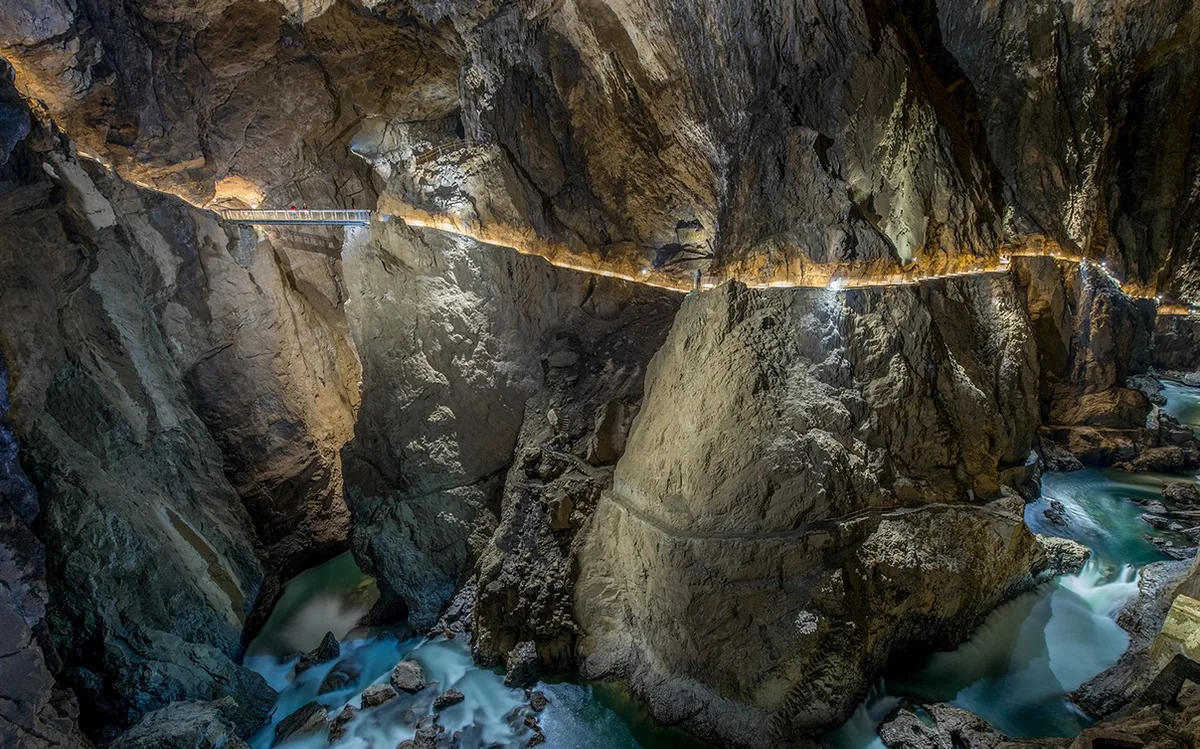
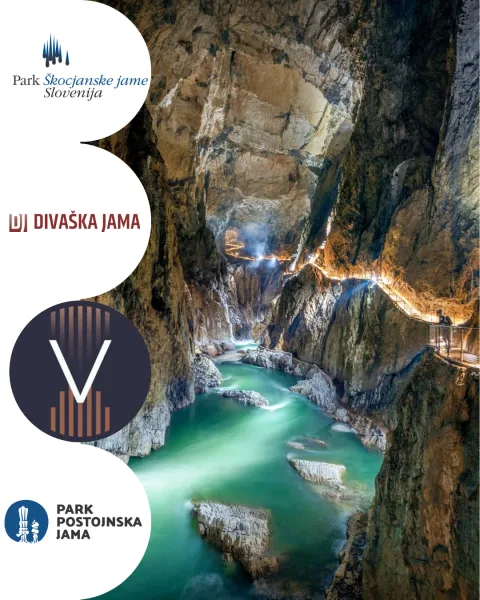
Following a successful bid in the public tender by Park Skocjanske jame, where the Mojekarte platform was selected as the best option, a technically and organizationally demanding implementation project was carried out. It included:
Deployment of the Mojekarte BoxOffice solution at the client's on-site box office and delivery of new fast and robust STIMARE ticket printers; delivery of ZEBRA handheld scanners for ticket validation and upgrade of existing physical access barriers with new COMInfo QR code readers, integrated with the Mojekarte Access Control solution; delivery of an automatic visitor counting system while ensuring complete anonymity; deployment of the Mojekarte Back Office solution for the client's reservations, guide, and accounting departments; customization of the Mojekarte Webshop solution and its integration with the client's website; integration of the online store with the banking processor; integration of the Mojekarte reservation and sales platform with the client's SAOP accounting system; training of users at all levels of the integrated platform. The first phase of the implementation project, which included delivery, installation, and launch of the agreed equipment along with the deployment and integration of the Box Office, Back Office, Webshop, and Access Control modules into a unified system, was successfully completed before the summer tourist season, and the integrated solution was handed over to the client for routine use.
The second execution phase of the implementation project involved the technically demanding integration of the Mojekarte reservation and sales platform with the client's SAOP accounting system, and began after the tourist season ended. With the formal handover of the working solution to the client, it was successfully completed in the autumn months.
We believe that in the years covered by the current service and maintenance agreement, the client will recognize the added value of modules it does not yet use and will decide to implement some of them. There are still quite a few possibilities available. Among the most relevant for the existing business processes at Park Skocjanske jame is the Mojekarte Retail module, which provides comprehensive support for retail operations with automatic inventory management.
Our development department responded quickly and prepared an upgrade for the online store that enabled buyers to pay for online ticket purchases using the BON21 mechanism. Among solutions for supporting the sale of tickets and other products typical of the events industry, the Mojekarte platform was the first to offer a comprehensive solution that enabled online reservations with the submission of all legally required documents and purchases using the BON21 payment mechanism.
Postojna Cave's online store was the first to receive the new option, and the first ticket purchases followed practically immediately after the upgrade. Upgrades to the online stores of Cankarjev dom, SNG Maribor, Bled Castle, NS Mura, and others soon followed.
Users of the Mojekarte platform were once again able to confirm on this occasion that they have a partner who responds professionally, responsibly, quickly, and effectively to changes in the environment and delivers timely solutions to new challenges.
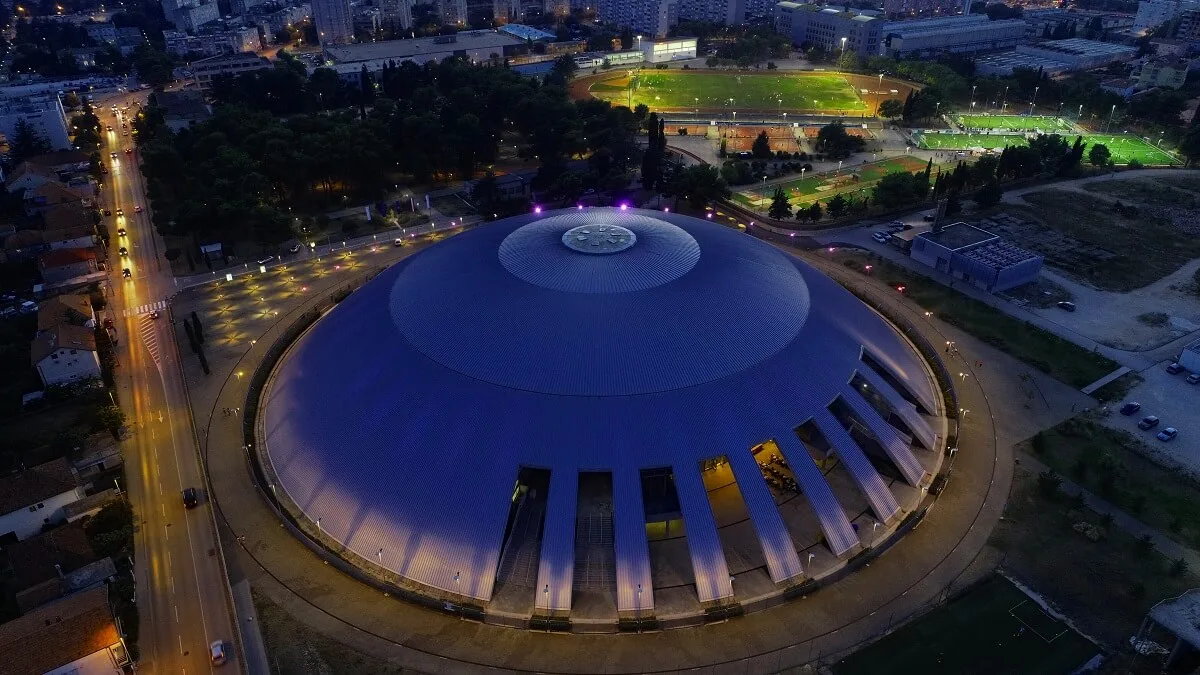
The Kresimir Cosic Arena, with a capacity of 9,000 seats, is the third-largest sports arena in Croatia after the Zagreb Arena and Split's Spaladium Arena. Although it is a multi-purpose venue, it is primarily used by the local basketball club KK Zadar. In addition to basketball games, the arena hosts concerts, sports competitions, congresses, fairs, and other events. The implementation project included: programming the digital visual layout of the arena's seating plan and deploying the Mojekarte BoxOffice solution to the client's on-site box offices; delivering fast STIMARE SML model ticket printers; delivering Zebra TC model handheld scanners and integrating the equipment with the Mojekarte Access Control solution; deploying the Mojekarte Back Office solution for the client's sales department; integrating the local sales platform with the croatia-tickets.com online ticket sales portal; training users at all levels of the integrated solution. The project at the Visnjik Sports Center in Zadar is a new recognition of the Mojekarte platform and a further confirmation of the expert knowledge and skills of an experienced team of professionals with international references, capable of tackling even the most demanding challenges.
Given the extremely challenging conditions, the year 2021 can be assessed on balance as positive. Like most people, we too wish above all for a return to normalcy, which would finally allow us to continue our development work. The team still has quite a few plans ahead, with the ultimate goal being the fifth generation of integrated software for ticketing marketing and sales.
Ljubljana, January 2022
Related stories
Ready for the next step?